Queer Lit with Lena Mattheis
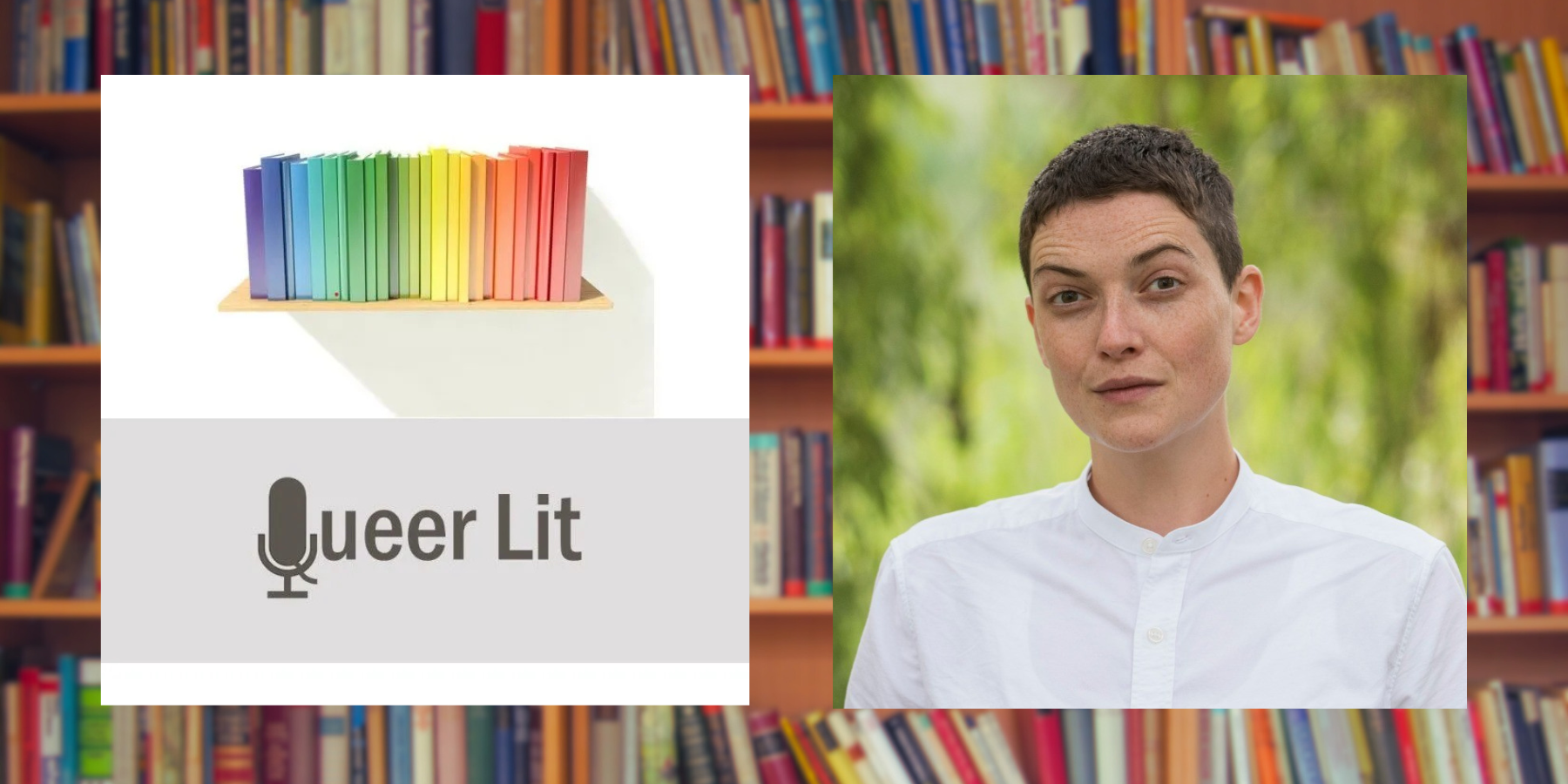
Amplified is an audio blog series about the sounds of scholarship from our team here at the Amplify Podcast Network. This month on Amplified, Stacey Copeland and Hannah McGregor are joined by Lena Mattheis to kick off a brand new series featuring the latest additions to our sustained cohort of podcasters. Lena is the creator and host of Queer Lit, a podcast about LGBTQIA2S+* literature and culture. In this conversation, we reflect on podcasting as a tool for community building and queer scholarly practice, tracing how Queer Lit emerged from Lena's teaching practice and a commitment to accessible feminist and queer knowledge creation.
-
[00:00:00] intro music
Stacey Copeland: Welcome to Amplified an audio blog and podcast about the sounds of scholarship from the Amplify Podcast Network. I'm your host, Stacey Copeland.
In this episode, we're kicking off a brand new series featuring the latest additions to our sustained cohort of podcasters, starting with Lena Mattheis. The creator and host of Queer Lit in this conversation, they sit down with me and with Hannah McGregor, my co-director of Amplify to reflect on podcasting as a tool for community building and queer scholarly practice tracing how Queer Lit grew out of Lena's teaching practice and a commitment to accessible feminist and queer knowledge creation. So let's cozy in and tune in with Queer Lit.
[00:01:03] Lena Mattheis: My name is Lena Mattheis. I use both they and she pronouns, although I probably prefer. Using no pronouns to describe myself. I'm flexible, and my podcast is called Queer Lit. I have been running Queer Lit for four years now, since 2021. And it's a podcast about LGBTQ2S+ literature and culture.
Started off as a purely academic podcast where I was talking to scholars of literature, but I've branched out a bit now sometimes just talking to people I find interesting or who write really cool books.
[00:01:41] Stacey Copeland: When we got the proposal for Queer Lit to join the Network, I was so impressed by the variety and both impressive names and just generally interesting people that you have on the show.
And you've been doing it for a while now. So the question I have for you to reflect on is what brought you to podcasting, and specifically why did you choose this medium as part of your academic work?
[00:02:04] Lena Mattheis: Unfortunately, I have an answer to that, that I think probably quite a few people have, because I initially started to really get into podcasting in the pandemic where that was obviously a space of isolation for everyone.
I also moved to a new country and to a tiny village in the pandemic. I was feeling really disconnected from. Especially my kind of queer and trans community, and I could see the same in the students that I was teaching exclusively online in that time. So initially I started the podcast in quite close connection with my teaching.
So I was teaching a module on L-G-B-T-Q literature and because. I was introducing students to quite complex queer and trans scholarship alongside the text they were reading. I thought, wouldn't it be amazing if I could. Get some of those scholars to speak about their work because obviously, there's some scholarship that, that I'm teaching that, I struggle with and this is literally my job.
But when I meet these scholars at conferences or at events and I talk to them you take away so much more. So I thought, okay, maybe podcasting can be a thing that I can use to bring that experience to my students. And I. Basically replaced every other seminar session with a podcast recording.
And the students then also had the option to if they preferred reading, they could still just read the scholar's essay or they could do both. So I'm also really invested in accessibility and then. I opened an online space, just a kind of zoom room that was optional, where students could just come and talk to me about the scholarship that they'd engaged with, either again, through the podcast, through reading through a video, sometimes through all three if they wanted.
And I thought I'm just gonna sit here and wait if you know that one really keen student might show up. But those sessions ended up being the most interesting sessions. The entire module because I had really good participation and students were clearly like really craving that sense of connection.
And that was amplified by that particular moment in time. But I think it is also something that, especially queer and trans students and especially, younger people who are still in the process of finding their communities really crave. So I feel like. Queer Lit for me was a really useful didactic tool, a really great tool for me to meet interesting people because I can't think by myself.
I need to talk to other people, but then also create this really important moment of community.
[00:04:48] Hannah McGregor: I love that. And it really ties into our next question, what drew you to want to join the Amplify Podcast Network in the first place, but particularly how your work with queer lit. Aligns with the values of amplify around open scholarship, critical pedagogy, anti-racism, and feminist social justice.
And I think you can hear the very clear connections to those priorities in how you describe the origin of your own podcasting markets. Very clearly at the heart of what drew you to podcasting in the first place. But could you speak a little bit more to how you think about those values?
[00:05:25] Lena Mattheis: Yeah, absolutely. You also asked what drew me to amplify and to be honest I I am not entirely sure whether I came across Amplify first or whether I came across material Girls first. Another one of your podcasts even perhaps, but an absolutely avid material girls listener. And I have also really enjoyed the idea around amplify.
I very distinctly remember going to the website for the first time and reading the manifesto because you that's what you need. In addition to really feeling like that aligns with the values that I have when it comes to podcasting and knowledge production. I also really enjoy. Like all of the amazing free materials you provide, like there's such good stuff on the website.
It's amazing. I I recommend it to people all the time. I use it all the time when I teach students to podcast. But also when I when people ask me how they might think about setting up a podcast, that first made me aware of Amplify. But then, yeah, learning about the mission to create this space for.
For open scholarship, for new kinds of sharing knowledge and of questioning the hierarchies that publication creates. Especially in academia, I think there's obviously there's so much gatekeeping. There are so many ways in which scholarly. Scholarly publishing is not particularly feminist, is definitely not anti-racist, is not inclusive of of trans and gender non-conforming voices.
There, there are so many issues, right? But publishing takes. 5,000 years. And that's I think another area where, we all know this is not particularly productive, right? That's something we, we write, we can expect a what, a two year wait at least for it to actually reach the people that, that should hear about this.
I think, podcasting is such an important moment of. Not just allowing us to make publishing, sharing knowledge, creating knowledge, more accessible, more diverse, and more socially responsible. Also to just overhaul a system that, also isn't working for the majority voices. It's not just, it's not just minoritized voices that are suffering as maybe Israel, but yeah.
Maybe suffering from the tyranny of the academic publishing system. That's maybe a bit strongly phrased, but I'm gonna go with it.
[00:07:56] Hannah McGregor: Oh my God. It is honestly, it is pretty tyrannical though. And exploitative,
[00:08:02] Stacey Copeland: I feel like this is a space where we're fine with this language. This is- the manifesto, you know what we have on our website.
This is like mild conversation. I think still. But I, I really enjoyed listening to you. Kinda reflect on, the frustrations of how long it takes to publish within the academic publishing pipeline and frustrations around access to knowledge. And so also how do we access. Different audiences and people that you, you want to reach or be in discussion with.
What do you actually know about your own listenership for Queer Lit and who do you imagine you're speaking to when you put together an episode?
[00:08:44] Lena Mattheis: Sometimes i'm really surprised. Obviously I know that many of my students listen because I also use the, still use the podcast in teaching. But you know that they keep listening.
Actually, a former student messaged me the other day on LinkedIn and was like, oh, I was listening to this episode do you have some more reading recommendations? And I was like, oh my God, this is really lovely for that. That's also a way to stay connected to, these amazing young people that.
But so so often I meet and then I never see again and I'm like, oh, I wonder what this person is doing. I think most of the time I think I'm speaking into the void and I'm very happy that apparently I'm not, I do have expert conversations on the podcast, but I try to remember to also ask my guests questions of, there are some of these terms that we throw around.
As if everyone knew what they meant and that kind of really weird and abstract, like epistemology, where like I think occasionally going in there and saying okay, but what does this actually mean? And then. Depending on my guests, sometimes they look at me like, what do you know? You don't mean what ophthalmology means.
Let's discuss. That's, I think that's the only moment where I think about it. And then I recently had the opportunity to very actively think about it because I did my first live recording and it was amazing. And I now want to only do live recordings who came out to the live recording?
It was at a festival at Out & Wild, which is a really lovely festival for queer women.
Trans women, and those who are non-binary might be the, I'm not entirely sure which umbrella, and they have a. They have so many different things. So it's also a festival where you can, just do a gong bath in the morning and then practice some archery and then, go on a hike, do all the lesbian things.
[00:10:29] Hannah McGregor: This is, I was like, I wanna go to this festival immediately. It's archery with lesbians. Yes, please.
[00:10:37] Lena Mattheis: It's fabulous. And then there's also an entire stage dedicated to literature. So I did a live recording this curated by the amazing Zoe and I did a live recording with the lovely poet Leila King.
Yeah, we were just chatting about. Poetry and having a nice time with the lesbians and non-binary queers.
[00:10:58] Hannah McGregor: I love that. That sounds like a delight. Yeah. The dream audience. Okay. It really was. So I do feel like this ties into the conversation about about your listenership and that sort of pedagogical origin of your work.
But how does making the podcast on a regular basis feed back into your teaching. Or, and or your research?
[00:11:23] Lena Mattheis: Oh, it does all the time into both. And first was really nice because now that I have created this space that's been running for a while, that kind of has a certain listenership that some of my, like the academics and my bubble, but also outside of it.
Might be aware of or maybe their friend's been on it. People are excited when I ask them to be on the podcast and send me their stuff. It's just, to be honest, for me, a very nice way to engage with both the research that I just find really relevant and interesting right now and that my students are interested in, but also things that I'm working on and get to speak to people directly and.
People are so generous in sharing their expertise and knowledge. So I find that a lot of my guests are also willing to speak about their upcoming work, which again, I'd usually have to wait quite a long time to, to be in conversation with them about, so it feeds very directly. Into my research.
And then I also, I really like when I give talks. I like to rather than only having, quotes from people on slides to have like little snippets from my conversations with them and just play their actual voices because I think that's awesome. It's so nice to have them, phrase stuff in very, an often just in plain language.
And also again, to hear someone's voice, I think makes such a difference in how we connect to their line of thinking and their experiences where often, we can hear in their voice a little part of how they might experience the world and how they might have come to that knowledge.
[00:12:57] Hannah McGregor: I love that. Can you think of any particular examples of a person who you're like, oh, I'm really like engaging with this person's scholarship right now. I wonder if I could just have a conversation with them.
[00:13:09] Lena Mattheis: Several of them. I think I just did a second episode with Sara Ahmed, who's, just like also just such a lovely person to spend time with.
[00:13:18] Hannah McGregor: Generous. Yeah. Walks the feminist scholar talk, it's just like actually will willing to have conversations with people.
[00:13:26] Lena Mattheis: Yeah, absolutely. Another person that immediately comes to mind is Susan Stryker, who like equally is just so yeah. Willing to engage. My main research in the past few years has been on gender non-conformity pronouns, and I have this little snippet where Susan introduces her pronouns and talks about how we might use they, them as a pronoun, as a kind of general pronoun at treating it as a, the formal where, having knowledge of someone's pronouns is actually quite a personal thing.
And she says,'' I am they, them in the streets, she, her and the sheets,'' and I always play that little bit at, conferences and stuff when I cite her work on this. And yeah, that's a really nice little-
I do an end of year special every year and ask people about the queer thing they -did that year and whether they have any kind of new year, Christmas holiday, any kind of traditions. And yeah, Susan sent in a really lovely voice note for for my. End of year special as well. Yeah, it's just ev everyone who's willing to participate in my silly little end of year special has a special place in my heart.
[00:14:31] Hannah McGregor: Oh my goodness. That is beautiful.
[00:14:32] Stacey Copeland: Like listening to you talk about queer Lit, you can really tell how much it's intertwined with the way that you teach, the research that you do, the way that you build community around queer theory, around literature. And a question we are often thinking about with the network is how.
Do our institutions receive our podcasting as part of that work? And is it actually counted as part of your research and teaching? And also what does that mean on practicality of every day? Do you have the time and resources to be able to do your podcasting work as part of your position within the university?
[00:15:10] Lena Mattheis: I have no idea.
I just, this is such a, I think it's such an important question. I don't think this is specific to my university, but I think in general, academic workloads. So deeply. Intransparent. Oh, mysterious. I have no idea. I like, I should I realize that I this's probably not something that I should admit on a publicly available podcast, but no I can tell you about a.
Maybe three hours in my academic year that are officially accounted for podcasting. That's for running workshops, but then also when I like make space to help colleagues set up their own podcasts. Often that's colleagues from other departments. And I just I'm excited about this, so I'm willing to.
Just spend an extra hour that I'm not really getting paid for because I wanna talk to them about podcasting and give them some of those tools that I've generally, generously received from others. I'm doing something that's not for my own department, even if workload wasn't mysterious.
How would that even be counted? Because I'm not doing it for my for my area. I just try to make it work and I, on a regular basis, get to a point where I think I can't, I can't spend another weekend editing audio because then I start my work week completely tired.
And on other days, I enjoy the flexibility of my academic schedule to say I can, if I have a space, I can do a recording during the day or whatever. But what the university thinks of that, officially, who knows? They like it that I podcast. They they talk about it at our open days.
They make me show students the podcast room. So there's some interest there, but officially, yeah. Do you know, I dunno, they love,
[00:16:59] Hannah McGregor: do I know specifically how your institution counts your podcast?
[00:17:02] Lena Mattheis: No. For your own work, is this, do you have clear definitions?
[00:17:05] Stacey Copeland: No, definitely not.
[00:17:07] Hannah McGregor: It's one of the I'm on a number of committees right now about like incorporating EDI principles into how we evaluate faculty work. And one of the, one of the biggest structural challenges is that our workload, and, SFU, this is specified in the collective agreement.
Our workload is defined around the containers of teaching, research, and service, and podcasting doesn't fit. Neatly into one of those two because it's of them. 'cause it's all of them inherently at the same time. And so people will choose where to put it tactically. And I do think that sort of makes sense to just choose one and then make the argument for it.
But at the end of the day to like really value the kind of work that I think we care about when we are thinking about podcasting, we would need to dismantle that whole structure. But that structure exists in large part to try to at least put some containers around the unwieldy academic workload because otherwise, how do we even know how much work we're supposed to be doing?
I would argue considering that container is widespread and that all of us are working too much, that means that it's not effective.
[00:18:24] Stacey Copeland: Yeah.
[00:18:24] Hannah McGregor: As a way of delimiting our workloads.
[00:18:27] Lena Mattheis: Yeah. I think dismantling is a good prompt there. I feel like dismantle We should
[00:18:33] Hannah McGregor: in the, not the current airing series, but the previous series of Task master had an American comedian on it, Jason, who dedicated his time on the series to an approach that he called Destroy Dismantle and engulf in flames.
That was like what he was trying to do. That sounds amazing. And I was like, if that ain't my mission at the university,
[00:18:59] Lena Mattheis: I, I feel like. I'm there, like intellectually, that's my spirit, but also personality wise, I'm a people pleaser so I'm really like I'm there with you, but I'm like, set it on fire, but then also bring chocolate, maybe?
[00:19:12] Stacey Copeland: Make s'mores while we're there. That's the, (laughter)
[00:19:15] Lena Mattheis: yeah,
[00:19:15] Hannah McGregor: set it on fire, but make smores.
Oh my God. Okay. We've got one last question for you, which is, looking ahead, say at the next year of Queer Lit, what are you hoping to achieve? What are you excited about? What? What is on the horizon for you with your podcasting work?
[00:19:38] Lena Mattheis: I'm very excited too be part of Amplify and to be in conversation with lots of really amazing podcasters.
So yeah, being in conversations with more people who are invested in the same stuff that I'm invested in, and that is important to me and learning from each other. I, yeah, I wonder how how that's going to affect my podcasting, because there's always so many exciting books that I'm already looking forward to recording about the.
Thing I, I'm very excited about is making my end of year special, because that's when I get to hear from my listeners as well. So it's an open invitation for any previous guest, but also any listeners to tell me about themselves. And they usually can share impressions of the podcast as well. And that allows me to then in, in the year coming up.
Shape the podcast more to both what I'm excited about, but also what my listeners and guests are excited about. I have a thing coming up that I'm excited, yet at the same time a bit embarrassed about because I I have a book coming up, and so far I haven't really I've never really done anything about my own research on the podcast.
But I have a book coming up and I've asked some previous guests to record conversations about my work that I'm going to share, which is gonna be. Weird because that's awesome. Yeah. I think it's gonna be fun. And I, I enjoyed having these conversations and the generosity of these scholars, but also, oh, talking about my own stuff and my own podcast.
We'll see how it goes. You let me know, but I'm I'm excited, yet terrified. It's gonna be great if it makes you feel better. I talk about my own work on my podcast all the time. Very good.
That does make me feel better. Oh yeah. And of course I will probably actually have another message of listeners demanding an Agatha all along episode with Hannah McGregor.
[00:21:28] Stacey Copeland: We demand it. (laughter)
[00:21:32] Hannah McGregor: I'm ready.
[00:21:33] Lena Mattheis: Thank you both so much. It's yeah, it's been a lovely space to have this conversation and to you. Talk about all shared values. So thank you. I really appreciate that.
[00:21:51] Stacey Copeland: [ o u t r o m u s i c ]
Thanks for listening to amplified an audio blog and podcast from the Amplify Podcast Network. This conversation with Lena Mattheis is the first in our sustained cohort. Interview series and we'll be sharing more of these conversations with members of our new cohort In the months ahead, you can find links to Queer Lit and more about our sustained stream in the show notes.
All right, catch you next time. [music ends]
-
Dr Lena Mattheis (they/she) is a lecturer in contemporary literature at the University of Surrey. Lena specialises in queer and trans literature, narrative studies and literary geography and has recently completed a monograph titled Queer Forms and Pronouns: Gender Non-conformity in Anglophone Literature, which is forthcoming with Oxford University Press. Since April 2021, Lena has been hosting the Queer Lit podcast and has recorded conversations with Sara Ahmed, Susan Stryker, Sue Lanser, Jack Halberstam, Susan Stryker, Lee Edelman, Meg-John Barker and many other inspiring scholars. In addition to another monograph, Translocality in Contemporary City Novels (Palgrave, 2021), Lena’s work has been published in journals such as Narrative, Transnational Literature, Literary Geographies, or WSQ. Their forthcoming book Queer Forms and Pronouns is available March 2026.
-
Lena’s forthcoming book - Queer Forms and Pronouns
Intro + Outro Theme Music: Pxl Cray – Blue Dot Studios (2016)
Written and produced by: Stacey Copeland and Hannah McGregor
